

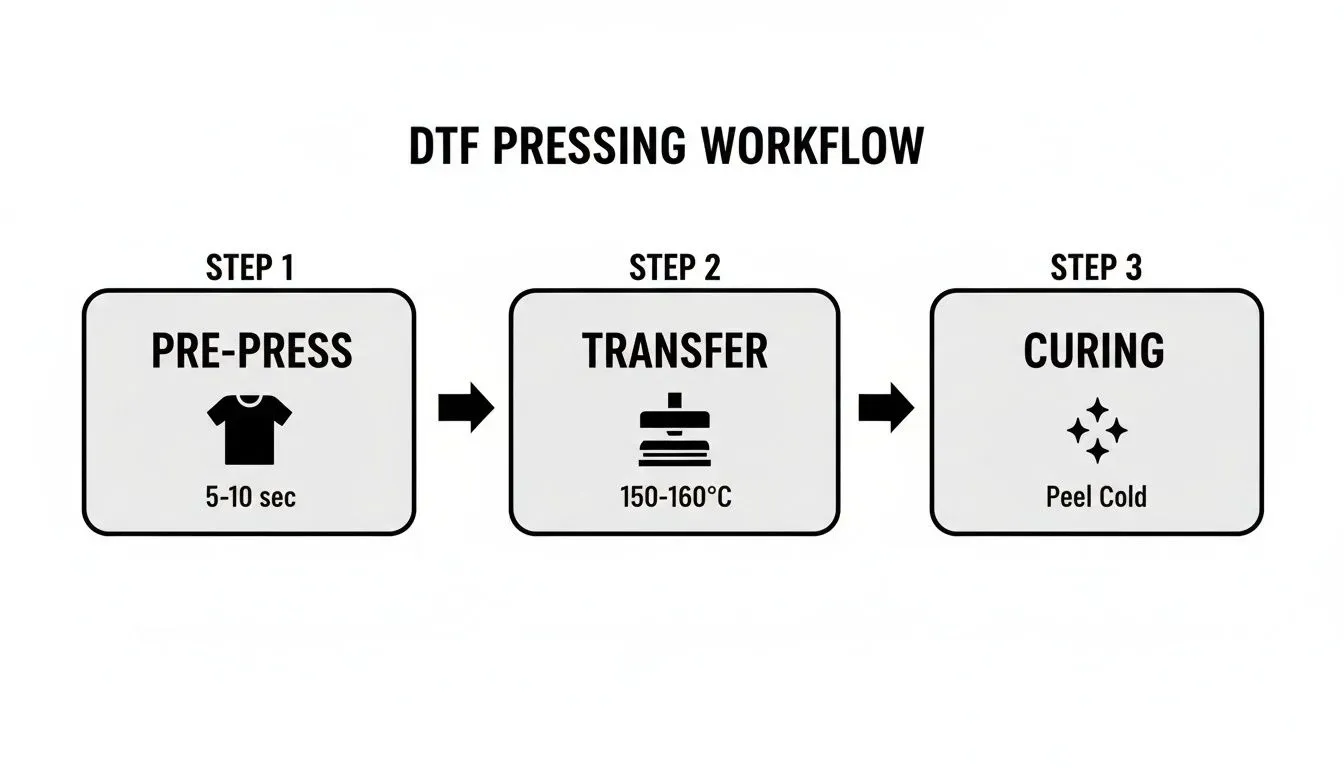
DTF transfers workflow is reshaping how designers and garment makers approach print-on-demand and small-batch production. From concept to finished dress, direct-to-film printing delivers vibrant color, texture, and scale, and is explained in practical terms within a Direct-to-film printing guide. This introductory guide highlights the key steps—design preparation, color management, printing, powder application, curing, and heat transfer—to help teams produce consistent, high-quality results. By standardizing processes and documenting parameters, studios can improve efficiency, repeatability, and alignment with a design to dress workflow, a core aim of DTF workflow optimization. If you’re exploring options for small runs or proofs, understanding this workflow equips you to optimize costs and delivery times while preserving fabric-friendly finishes.
Viewed through an alternative framing, this is a film-to-fabric decoration pipeline that begins with artwork and culminates in a durable garment application. In other terms, it resembles an ink-on-film transfer and heat-press workflow where an adhesive powder enables secure adhesion. From an LSI perspective, related terms include the DTF transfer process, a practical DTF printing steps guide, and a design to dress workflow that ties design intent directly to garment construction. This broader vocabulary helps teams communicate requirements across suppliers and align color, texture, and fit in production.
DTF Transfers Workflow: From Concept to Dress
The DTF transfers workflow enables designers and garment makers to move from concept to a finished dress with efficiency, aligning design intent with color accuracy, texture, and scale. This end-to-end process coordinates artwork preparation, film printing, adhesive powder application, curing, and the final heat-transfer step to deliver consistent results across sizes and fabrics.
When implemented as a repeatable system, the DTF transfers workflow reduces guesswork and rework, supporting both small studios and established brands. Clear documentation, standardized procedures, and cross-functional collaboration help shorten lead times while maintaining high quality, making color-managed production and reliable transfers achievable at volume.
DTF Transfer Process Essentials: Design, Color, and Print Alignment
Getting the most from the DTF transfer process starts with robust design preparation and color management. Clean files, correct resolution, and ICC-profile-based workflows ensure that the final print aligns with the garment after transfer, minimizing shifts caused by media and fabric interactions.
This stage also emphasizes substrate planning and white-layer considerations for dark fabrics, precise printer calibration, and planned color layering. By focusing on color accuracy and registration early, teams reduce misregistration and maximize wash durability across diverse garment types.
Direct-to-Film Printing Guide: Film Handling, Color Layers, and Quality
The Direct-to-Film printing guide highlights selecting compatible film, ink chemistry, and printer settings to achieve vibrant, durable results. Proper film handling, clean loading, and consistent feeding reduce banding and misalignment during heat transfer.
White ink layering is essential for dark garments, so planning the order of color layers ensures bright, stable reproduction after curing. With careful color management and alignment, this stage establishes a solid foundation for reliable transfers across fabrics.
Design to Dress Workflow: Aligning Creative Concepts with Garment Production
Design to dress workflow connects creative files to real-world garments by mapping artwork to garment size ranges, fabric behavior, and finishing processes. Early decisions about resolution, color profiles, and masking help ensure clean edges and accurate placement during transfer.
In practice, this approach reduces surprises during printing and pressing by coordinating the file design with the clothing production plan, enabling smoother handoffs between design, sampling, and final production. This alignment supports efficient proofs and scalable runs across multiple SKUs.
DTF Printing Steps and DTF Workflow Optimization for Consistency
DTF printing steps describe the sequential actions from print preparation to final transfer, including printer calibration, film handling, white-layer management, and test proofs. A well-documented set of steps helps teams reproduce the same look across batches and seasons.
DTF workflow optimization focuses on reducing waste, standardizing curing times, and aligning heat-press parameters with fabric type. By tracking metrics, applying continuous improvements, and maintaining equipment, brands achieve repeatable quality, faster turnaround, and greater overall efficiency.
Frequently Asked Questions
What is the DTF transfers workflow and how does it support a design to dress workflow?
The DTF transfers workflow is an end-to-end process that coordinates artwork preparation, film printing, adhesive powder application, curing, and heat transfer onto fabric. It supports a design to dress workflow by providing a repeatable path from concept to finished garment, enabling vibrant color, texture control, and durable results across small runs or proofs. Benefits include improved color accuracy, wash durability, and the ability to handle light, dark, and unusual textiles. Key steps—design preparation, printing, powder, curing, transfer, and final QC—are standardized to reduce waste and boost consistency.
What are the essential DTF printing steps in the Direct-to-film printing guide?
Core steps in the Direct-to-film printing guide for DTF printing steps include: design preparation with correct resolution, color management, and file format; printing on DTF film with proper printer alignment; white layer management for dark fabrics; adhesive powder application; pre-cure handling; curing; heat transfer to the garment; and post-press inspection. Ensure printer calibration, film handling, and color profiles are aligned with the design prep to minimize color shifts and misregistration, delivering accurate, vibrant results.
How can you optimize the DTF workflow for consistency and efficiency?
DTF workflow optimization focuses on repeatability and speed. Implement SOPs for each garment type and print run, document standard parameters (resolution, ICC profiles, curing times), and plan batch production. Regular maintenance and calibration of printers, consistent film and powder handling, clear labeling, and robust color management reduce variability. Standardize design file conventions and use alignment fixtures to speed up setup, enabling reliable, scalable results across orders.
Why are color management and file preparation critical in the DTF transfer process?
Color management and file preparation are central to the DTF transfer process. Use a high-resolution design (often 300 PPI at the target size), ICC profiles tailored to your printer/film/ink combo, and proper color separations with transparent masks as needed. Plan for garment size range and substrate differences, ensure accurate alignment with the garment, and manage white ink layers for dark fabrics. When these steps are well-handled, color fidelity and transfer durability are preserved through printing and heat pressing.
What common pitfalls occur in the DTF transfers workflow and how can you troubleshoot them?
Common pitfalls include color shifts, white underbase inconsistencies on dark fabrics, uneven transfers, peeling or cracking after wash, and film or powder residues. Troubleshooting tips: re-check color profiles and recalibrate printers, adjust white layer density and color layer order, verify heat press temperature, time, and pressure, ensure proper curing, clean films and powder equipment, and confirm substrate compatibility. Document parameters in SOPs for different fabrics to prevent recurrence and improve overall workflow optimization.
| Stage | Key Points | Benefits / Outcomes |
|---|---|---|
| Introduction |
|
Sets the foundation for predictable production and quality across all later stages. |
| Design and Artwork Preparation |
|
Foundation for predictable printing and accurate color transfer; reduces misalignment in later steps. |
| Printing and Film Handling |
|
Achieves faithful color representation and reliable transfer readiness. |
| Powder Application and Curing |
|
Reliable transfer surface with strong wash durability and reduced waste from misprints. |
| Heat Transfer to Garment |
|
Produces a precise, durable transfer with consistent color and texture when executed correctly. |
| Post-press Finishing and Inspection |
|
Ensures visibility of flaws early and maintains high quality across batches. |
| Quality Control, Color Management, and Materials Choice |
|
High consistency, fewer defects, and scalable production with better long-term outcomes. |
| Troubleshooting and Common Pitfalls |
|
Guided fixes reduce rework, improve yield, and maintain quality across runs. |
| Production Efficiency and Workflow Optimization |
|
Replicable, efficient production that can scale with demand and design diversity. |
| Conclusion (from base content) |
|
A cohesive, end-to-end system that supports reliable, scalable results for varied fabrics and design needs. |
Summary
Conclusion: The DTF transfers workflow—from design to dress—offers a flexible, scalable approach to garment decoration. By focusing on careful design preparation, precise printing, controlled powder application, proper curing, and accurate heat transfer, you can achieve vibrant, durable results across a wide range of fabrics. The key is to treat each stage as part of an integrated system where the design, materials, and equipment work together to produce consistent, high-quality outcomes. With practice, you’ll develop a repeatable, efficient process that meets the needs of your clients, your team, and your bottom line. Whether you’re working with light fabrics or dark garments, the fundamentals remain the same: plan, print, powder, cure, transfer, and verify—every step contributing to a successful, repeatable DTF transfers workflow.